Which Way Should the Nail Drill Spin?
Study These Directions Since Nail Drill Rotations Matter a Lot to Your Nail Care Process
This guideline shows you how different nail drill rotations work their functions and which orientation suits you best for various tasks.
To perfect your manicures, you must first understand how nail drill direction affects your results, no matter your experience level.
Understanding Nail Drill Rotation
The nail drill system operates by rotating a bit quickly to uniformly enhance and care for the nails.
What direction the drill spins influences its working power and safety measures. Machines include a switch that lets you turn the drill spin direction for specific work requirements.
Understanding how rotating the drill bit affects nail treatment results holds great importance.
How well the drill deals with the nail depends on its rotation direction. The right movement and nail type combination leads to the best outcomes when working with manicure tools.
The Drill Direction System Works Differently for Forward and Reverse Spinning
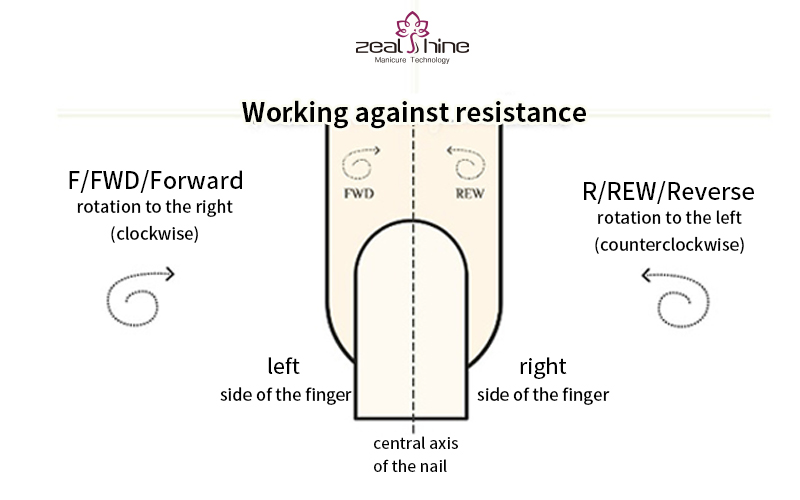
The standard nail drill bits spin either in a right-handed direction or a left-handed direction.
There are two clear movement directions to select from:
The drill bit rotates toward the right for a clockwise motion.
The drill tool spins left in a counterclockwise direction.
This section explains which drill direction suits different nail tasks and presents the recommended option.
Under What Circumstances You Should Pick Clockwise Drilling Direction
Most nail drills work in a clockwise motion, which handles most nail procedures for clients.
Clockwise becomes the chosen direction because this setting matches the natural angle used for most nail work on the main hand.
✅ Ideal Tasks for Clockwise Spin:
Using the nail drill in this direction works best while you file nails on the dominant hand.
The clockwise movement suits right-handed people best when they use their dominant right hand to work.
It becomes easier for the drill to perform cutting motions during hand motions.Smoothing the Nail Surface
When you aim to make a nail smooth or remove tiny product layers like nails, using the clockwise rotation method will work best.
This method reduces the risk of damaging the nail surface.Cuticle Cleaning
Using the clockwise spin effectively reaches the cuticle area.
The drill bit travels forward to press tight cuticles and completely remove unwanted skin segments.Acrylic or Gel Removal
The clockwise spin creates an even filing motion that makes it easy to reduce acrylic and gel layers effectively.
You Should Use Counterclockwise Spin Under Specific Circumstances
You should work in the counterclockwise direction while filing the non-dominant hand of right-handed users.
You should use this direction when specific hand movements need the drill bit at different positions.
✅ Ideal Tasks for Counterclockwise Spin:
Dress the nails of your weaker hand by turning your drill counterclockwise.
Right-handed people can achieve better control and ease with their non-dominant hands when they use counterclockwise rotations during their tasks.
The counter-spinning position helps you create better angles with your wrist and manage the file better.Detailed Cuticle Work
The counterclockwise spin helps you perform small cuticle and edge work more accurately on the nail plate.
This technique protects your skin from the drill because you need more hand stability on the drill while using your weak hand.Shaping the Nail
You typically file the natural nail and its edges counterclockwise on your weaker hand.
The drill works easier and produces better results for small nail details.Finishing Touches
The counterclockwise position proves handy during finishing work as it produces smoother outcomes on both hands but delivers exceptional results when you work on your non-dominant hand.
Switching Between Clockwise and Counterclockwise
You need to understand which situations call for this direction shift on your nail drill to achieve perfect professional results.
Current nail drills come with an automatic reverse button that changes drill direction between clockwise and counterclockwise motion.
✅ To ensure the best results:
Use a clockwise direction for the dominant hand throughout all of your tasks.
When using the non-dominant hand, turn counterclockwise to get better control over the nail file.
The recurring direction switch helps you avoid wrist damage during two-hand manicure and pedicure work while allowing you to stay precise in your work.
The Proper Direction Makes Nail Treatment Safer
Moving the nail drill in its proper direction helps safeguard your hand and delivers the best results.
Using a nail file against its natural growth direction will do more damage by damaging the nail and yet is uncomfortable.
Incorrect nail filing direction puts your drill at risk while also damaging nails since it creates inappropriate pressure on them.
Shifting between these directions lets you maintain equal nail wear on all sides to avoid damaging one side more than the other.
Tracking the drill direction lets you achieve high-quality nail outcomes.
Conclusion
Understand your nail drill direction to make better nail care processes.
The two rotation directions, clock and counter clock, help professionals do better and pain-free work.
Motorcyclists should file with their dominant hand in a clockwise motion but use their non-dominant hand counterclockwise.
Using appropriate nail drill rotation settings will help you bring perfect results to your nail projects no matter what work you perform on them.
Accessory recommendations and nail care information come from www.zsbeauty.com, where professionals worldwide recommend their trusted products.
FAQs
1. I need to change direction between clockwise and counterclockwise motions as I work with my nail drill.
Move from clockwise to counterclockwise strokes when filing the nails of your dominant and non-dominant hand.
The two navigation modes create a better performance for handling various nail operations.
2. What tells me when I must change the direction of my nail drill operation?
When your drill feels resistant during use, you need to adjust your direction on the nail drill to prevent hand strain, especially when you are working with your weaker hand.
3. Using the incorrect direction on my nails produces harm to the nails.
Moving your drill in the opposite direction from proper operation will harm your nails either by causing discomfort or by damaging the tools.
4. The nail drill will perform better when I work clockwise for all tasks.
Regular clockwise filing works excellent for the dominant hand but you will achieve better results on your non-dominant hand by using counterclockwise operations.
5. Should I rotate between directions when working on the nails of both hands?
You need to switch between clockwise and counterclockwise motion during your handwork to achieve the most precise nail drilling without straining the hands.