Speed vs Torque: How to Pick the Best Electric Nail Drill for Your Needs
Choosing the right electric nail drill is more than comparing speed numbers on a product label. Two models may both advertise 30,000 RPM, but perform completely differently—one may glide effortlessly through acrylic while another stalls, vibrates, and causes heat and discomfort.
That difference isn’t random.
It comes from a combination of RPM, torque, motor type, and internal engineering.
This guide explains not only what these terms mean—but why they matter and how they interact in real usage scenarios.
📍 Why RPM Alone Can Be Misleading
RPM (Rotations Per Minute) describes how fast the bit spins. Higher RPM means the drill can perform movements rapidly—but speed alone does not equal efficiency or power.
For example:
A drill running at 30,000 RPM with low torque may stall the moment it touches acrylic.
Meanwhile:
A high-torque drill at only 15,000–20,000 RPM can remove material smoothly without slowing down.
Why? Because resistance affects speed.
When the bit touches:
Natural nails → low resistance
Hard gel → medium resistance
Acrylic → high resistance
If the drill lacks torque, resistance forces it to lose speed, causing:
Friction = heat
Bit skipping = micro damage to natural nail
Technician fatigue
So while RPM determines the maximum potential speed, real working speed depends on torque.
💡 Understanding Torque: The “Muscle” Behind the Machine
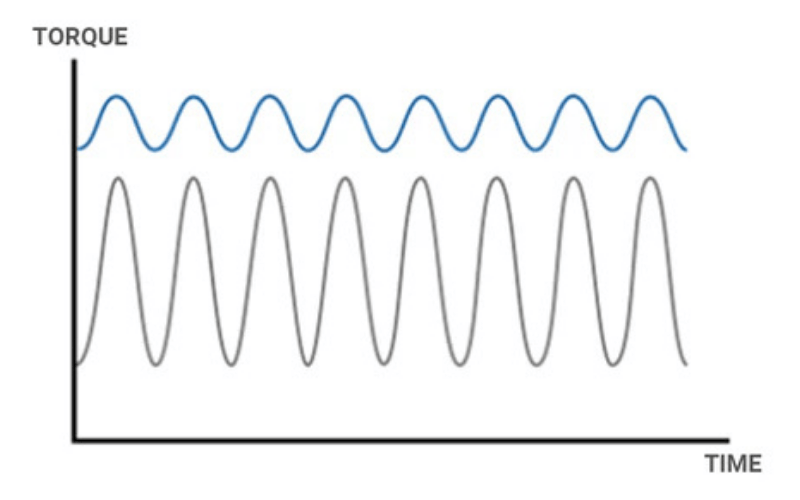
Torque measures how well the drill maintains speed under pressure.
Imagine two drills:
| Drill A | Drill B |
|---|---|
| 30,000 RPM + 1.5 N·cm torque | 20,000 RPM + 3.0 N·cm torque |
| Stalls easily on acrylic | Removes acrylic smoothly |
| Requires higher pressure | Requires very light pressure |
| Generates heat | Runs cooler |
Most professional nail techs prefer higher torque because:
It prevents stalling
Requires less pressure
Reduces heat on the nail plate
Improves accuracy and control
This is why salon-grade drills often prioritize stable torque at mid-range RPM, not just maximum speed.
🔬 Motor Type: The Engineering Difference Behind Performance
Different motor technologies affect torque, vibration, noise level, and durability. Understanding how they work helps you predict performance—not guess.
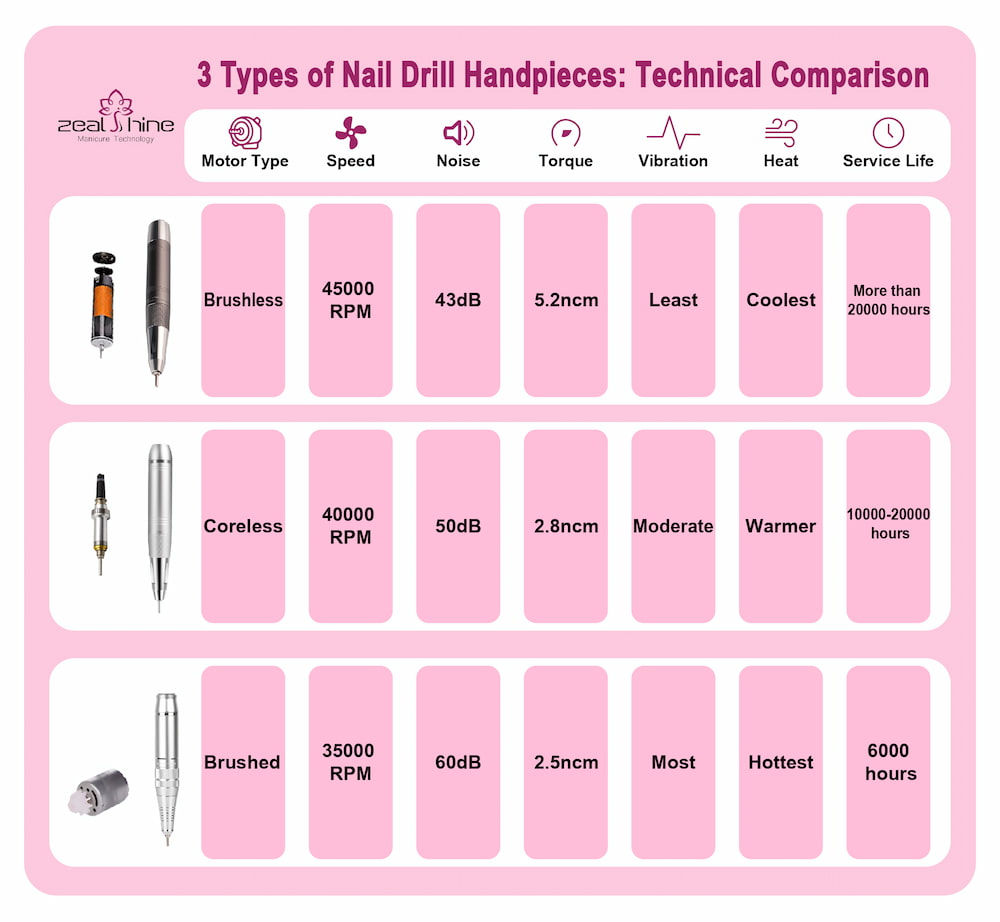
1. Carbon Brushed Motor — Mechanical Contact System
This motor works by using carbon brushes touching a rotating commutator to change electrical polarity.
What this means in practice:
Brushes create friction, which causes:
Heat buildup
Faster wear
More vibration
Noise over time
Performance declines as the brushes wear, which is why cheaper drills may feel smooth when new but degrade after months.
Best use: casual, short sessions—not continuous salon work.
2. Coreless Motor — Lightweight, Low-Inertia Engineering
Instead of a heavy iron core, the rotor is made of lightweight copper windings arranged in a “cup” shape.
This dramatically reduces inertia.
Why it matters:
Faster acceleration/deceleration
Lower vibration
Cooler operation
More consistent RPM
Because the rotor is lighter, the motor responds quickly to touch feedback—meaning more precision, especially for:
Cuticle work
Refining gel structure
Natural nail work
This makes coreless motors ideal for technicians prioritizing comfort and detail control.
3. Brushless Motor — Electronic Commutation for Precision
Instead of physical brushes, brushless motors use:
Hall sensors
Microcontrollers
Permanent magnet rotors
to manage polarity electronically.
Benefits:
Extremely stable torque
Very low noise and heat
Long lifespan
Ability to maintain RPM even under heavy resistance (acrylics)
Brushless motors perform most consistently at lower and mid-range speeds (10,000–25,000 RPM), which is where most real filing occurs.
🧪 Real-World Examples: When Specs Affect Technique
| Task | Low Torque Result | High Torque Result |
|---|---|---|
| Removing acrylic | Stalling, heat | Smooth, controlled removal |
| Refining builder gel | Requires pressure | Very light touch needed |
| Cuticle clean-up | Vibration → over-filing risk | Precision with safe control |
| Long-term use | Hand fatigue | Comfortable long sessions |
This is why many professionals say:
"You don’t push a good drill — it does the work for you."
✔ Matching Specs to User Type
| User Type | Ideal Setup |
|---|---|
| Occasional DIY user | 15–25K RPM + low/medium torque + carbon brushed |
| Gel manicure tech | 20–30K RPM + 2.5–3.0 torque + coreless |
| Acrylic specialist | 30–35K RPM + 3.0–4.5 torque + brushless |
| High-volume salon | Stable torque at mid-range RPM + brushless |
📌 Final Insight
A great electric nail drill is not defined by one specification—but by the balance between:
RPM (speed)
Torque (usable power)
Motor technology (engineering behind performance)
When these work together, the result is:
✔ smoother filing
✔ less heat
✔ less nail damage
✔ higher comfort for both tech and client