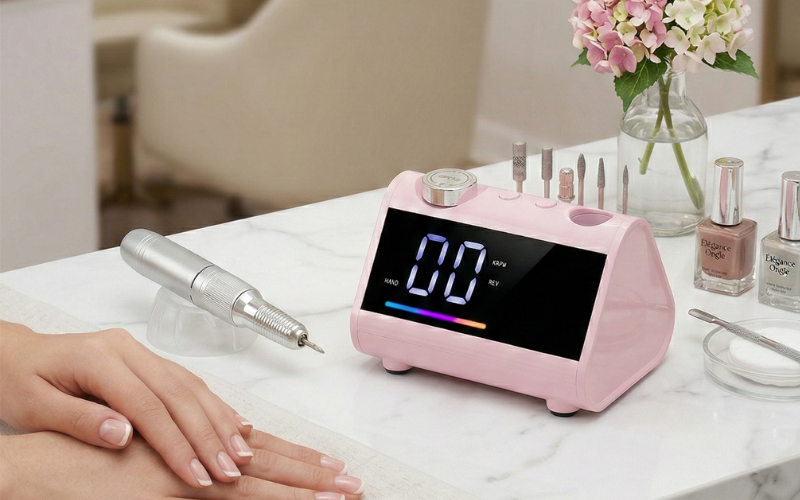
Introduction: RPM Should a Nail Drill Be?
How Much RPM Should a Nail Drill Be?
The term RPM appears everywhere in the discussion about nail drills—from product data to online training. But what does it really mean, and what RPM do you actually need?
Nail drill users and salon operators must understand RPM basics. RPM affects performance, comfort, and nail health. This guide will help you choose the right speed for your needs.
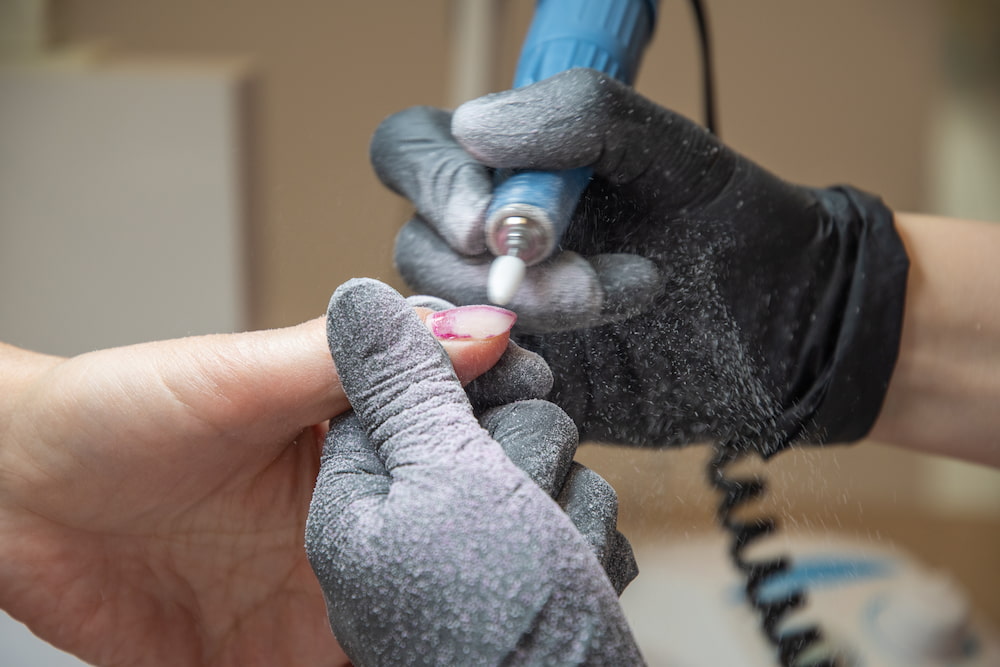
What Is RPM in Nail Drills?
RPM stands for Revolutions Per Minute. It measures how fast the drill bit spins. Higher RPM means faster movement, much like a car engine running at high speed.
Higher RPM helps with power and speed, ideal for removing old polish or hard enhancements. Lower RPM gives more control, especially useful for cuticles and natural nails.
Why RPM Matters
Different nail services need different speeds. Using the wrong RPM can lead to pain or damage:
🔽 Too Slow: The bit may pull on the skin, causing discomfort.
🔼 Too Fast: Can damage natural nails or over-file product.
Choosing the correct RPM improves safety and performance.
Ideal RPM for Beginners
Recommended: 5,000 – 12,000 RPM
New users should stay under 5,000 RPM at first. This range allows safe practice with shaping and prep work, while reducing the risk of mistakes.
Recommended RPM for Natural Nail Work
Recommended: 3,000 – 8,000 RPM
This range gently handles cuticle work and surface smoothing, with less heat buildup and better control.
RPM for Acrylic or Gel Removal
Recommended: 15,000 – 25,000 RPM
Use higher speeds with carbide or ceramic bits to effectively remove acrylic, hard gel, or poly gel. Control and proper technique are still essential.
RPM for Professional Use
Recommended: 30,000 – 35,000 RPM
Experienced technicians use high-speed drills for efficient, multi-tasking work. These tools demand skill but offer fast, effective results.
High RPM Doesn’t Always Mean Better
Just like a car doesn’t always run at 200 mph, you don’t need full RPM all the time. What matters most is adjustability and knowing when to use each setting.
A good nail drill lets you choose the right speed for the right task.
Factors That Influence RPM Choice
1. Your experience level
2. Nail type
3. Enhancement material
4. Drill bit type
Harder materials require more speed. Fragile nails need a gentler approach. And finer bits should run at lower RPMs for control and safety.
Safety Standards When Using RPM
1. Ensure the drill bit is securely in place before use.
2. Start slow and increase speed as needed.
3. Match drill bits with their ideal RPM rating.
4. Avoid generating heat by keeping the bit moving.
How to Choose the Right Nail Drill
Pick a drill with a wide speed range—from 0 to at least 30,000 RPM. Look for strong torque, low vibration, digital RPM display, and smooth controls.
Final Thoughts
Learning RPM settings and proper use will elevate your nail work, ensure client safety, and improve results across natural nails, acrylic removal, and detailed design.
Discover professional nail drill machines at Zeal Shine.
FAQs
What RPM speed should a starter nail technician run at?
Beginners should operate between 5,000 and 12,000 RPM.Should high RPM be used on natural nails?
No. Use 3,000 to 8,000 RPM to avoid damage.Why does my nail drill get hot?
Staying in one spot too long or using the wrong bit can cause heat. Keep moving and use the correct speed.What RPM removes acrylic nails?
Set the drill between 15,000 and 25,000 RPM for effective acrylic removal.Do professionals need high RPM drills?
Yes. Most pros use drills that go up to 35,000 RPM to handle a range of services efficiently.